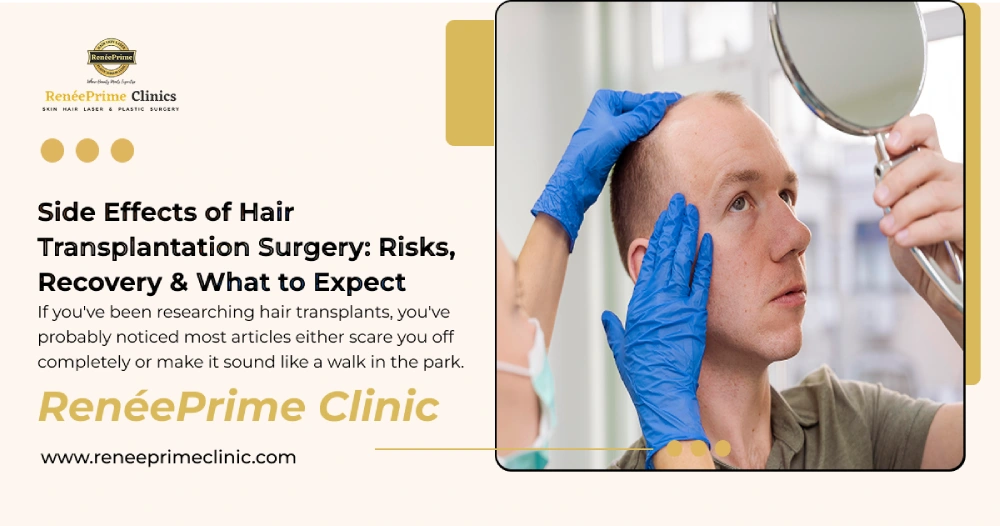
If you’ve been researching hair transplants, you’ve probably noticed most articles either scare you off completely or make it sound like a walk in the park. The truth sits somewhere in the middle.
Modern techniques like FUE and FUT have genuinely made the procedure safer and more natural-looking than what was around even ten years ago. But it’s still surgery. Your body will react, and knowing what that reaction looks like ahead of time makes the whole experience a lot less nerve-wracking.
Here’s what’s normal, what’s not, and when you should actually pick up the phone and call your surgeon.
Is It Actually Safe?
Short answer: yes, generally. When a qualified, experienced surgeon does the work, hair transplantation has a strong safety track record.
But “safe” doesn’t mean “risk-free,” and how your recovery goes depends a lot on things like:
- Whether you had FUE or FUT
- Your surgeon’s actual hands-on experience (not just their marketing)
- Your general health going into it
- The condition of your scalp beforehand
- Whether you actually follow the aftercare instructions instead of winging it
That last one trips up more people than you’d think.
What You’ll Probably Feel After Surgery
Swelling
This one catches people off guard because it doesn’t show up where you’d expect. Instead of the scalp, swelling often shows up around your forehead or eyes a couple of days later. It’s just fluid and your body’s normal healing response, not a red flag.
It usually fades on its own within a few days. Sleeping slightly propped up, using a cold compress, or taking whatever your doctor prescribed can help. Skip the internet home remedies and just follow what your clinic actually tells you.
Pain and Discomfort
Nobody loves this part, but it’s rarely as bad as people fear. Most of the soreness sits in the donor area; think tightness or tenderness rather than sharp pain. FUE and FUT patients tend to describe it a bit differently, and honestly, everyone’s pain tolerance is different too.
A few days of prescribed medication usually takes care of it.
Scabbing and Itching
Small scabs around the new grafts are just part of healing; don’t panic if you see them. Some itching tends to come along for the ride too.
The one thing worth repeating here: don’t scratch. Don’t pick. It’s tempting, especially a week or so in when it starts feeling less sore and more annoying, but disturbing a graft before it’s settled can undo the work. Your clinic will tell you exactly when you’re cleared to wash your hair normally again.
Shock Loss
This is the one that freaks people out the most, and honestly, it makes sense why. A few weeks after your transplant, you might notice hair, sometimes even the newly transplanted hair, falling out.
Take a breath. This is called shock loss, and it doesn’t mean anything went wrong. Hair grows in cycles, and the follicles usually stay put under the skin even when the visible strand sheds. New growth follows later, once the follicle re-enters its growing phase. It’s just not a fast or linear process, and the early weeks can genuinely look worse before they look better.
Scarring
Both techniques leave some kind of mark, just different kinds. FUE tends to leave tiny, scattered dot scars where individual follicles were removed. FUT, which takes a strip of scalp, usually leaves one thin line where it was closed up.
How visible either one ends up being really depends on your surgeon’s skill, how your skin heals, how well you stick to aftercare, and honestly your hairstyle too.
Infection
This is rare, but it’s the one you shouldn’t ignore if it happens. Watch for redness that keeps getting worse, pain that’s ramping up instead of settling down, unusual swelling, discharge, or a fever. Good hygiene and following your clinic’s aftercare plan make this unlikely, but if something feels off, don’t tough it out. Call your surgeon.
Bleeding or Inflammation
A little bleeding or redness right after the procedure is normal. Heavy bleeding or serious inflammation is not, and that’s worth a call too.
The Long Game: What Happens Months Later
Everyone fixates on the first week, but there’s a longer story here worth knowing about. Down the line, some patients notice scarring that’s more visible than they expected, uneven growth patterns, a hairline that doesn’t quite look natural, or continued thinning in areas that weren’t part of the transplant.
Worth remembering: a transplant moves hair you already have from one place to another. It doesn’t stop hair loss from continuing elsewhere. Depending on what’s actually causing your hair loss, your doctor might suggest pairing the transplant with an ongoing treatment plan.
So, How Long Does Recovery Actually Take?
Rough timeline, though your own mileage will vary:
- Days 1–5ish: swelling, redness, some soreness
- First couple weeks: scabs start flaking off, scalp keeps healing
- First few months: possible shedding (that shock loss we talked about)
- Around month 4–6: new growth starts becoming noticeable
- Around 12 months: results settle in and look more “final”
Some people see faster progress, some slower. Talk to your surgeon about what’s realistic for you specifically rather than comparing yourself to someone else’s timeline online.
Things That Actually Reduce Your Risk
Not everything is preventable, but a few things genuinely move the needle:
Choose your surgeon on skill, not price. A cheaper clinic that cuts corners on hygiene or experience isn’t actually saving you money if it costs you a worse result.
Actually follow the aftercare instructions. Not the loose version you remember; the specific one your clinic gave you.
Keep your hands off the treated area. Easier said than done, especially once the itching starts, but grafts need time to settle in undisturbed.
Don’t skip your follow-ups. They exist so small issues get caught before they become bigger ones.
When You Should Actually Call Your Doctor
A little discomfort and swelling? Normal, don’t worry. These, on the other hand, aren’t:
- Pain that’s getting worse instead of better
- Bleeding that won’t stop
- Signs of infection
- A fever
- Swelling that isn’t improving after a few days
- Unusual discharge
If you notice any of these, don’t wait it out hoping it resolves on its own; get in touch with your surgeon.
Frequently Asked Questions
1. Does a hair transplant actually hurt?
Less than most people expect. The procedure itself is done under local anesthesia, so you’re not feeling much in the moment. Afterward, it’s more mild soreness than real pain, and medication usually keeps it manageable.
2. I’m losing hair a few weeks after my transplant. Did it fail?
Almost certainly not. That’s shock loss, and it’s a normal, temporary part of the process. It looks worse than it is.
3. Will people be able to tell I had a transplant because of scarring?
Usually not, especially with an experienced surgeon. FUE scars are tiny and scattered; FUT leaves a thin line that’s typically covered by surrounding hair.
4. When can I get back to work and normal life?
Most people are back to non-strenuous activities within a few days to a week. Your surgeon will give you a more specific timeline based on your procedure.
5. How long until I see real results?
Give it several months for visible growth, and closer to a year for the full, settled result.
6. Will this stop my hair loss for good?
No, it redistributes hair you already have, but it doesn’t prevent future thinning elsewhere. Many people combine it with an ongoing hair loss treatment plan for that reason.
Final Thoughts
Reading through all the possible side effects can feel overwhelming, but in practice, most of what people go through some swelling, mild soreness, scabbing, a bit of shedding is just the scalp doing what it needs to do to heal. It sounds scarier on a page than it actually feels in real life.
What really shapes your experience is who’s holding the scalpel and how good the aftercare support is afterward. Clinics like ReneePrime Clinic, known for experienced surgeons and hands-on aftercare, tend to make that difference. If you’re seriously considering a transplant, a proper consultation is really the best next step; it’s where realistic expectations get set, and where most of your questions actually get answered.