A lot of people in Mumbai first notice pigmentation after acne, long hours in the sun, pregnancy, or even after trying the wrong skincare products. At first, it may look like simple tanning. Then the patches start becoming more stubborn. Makeup helps for a while, but the uneven skin tone keeps coming back.
That is usually the point where creams and home remedies stop giving enough improvement.
Professional pigmentation removal treatment can help reduce these patches safely – but only when the treatment matches your skin type and the actual cause of the pigmentation. What works for acne marks may not work for melasma. And in Indian skin, choosing the wrong treatment too quickly can sometimes make the discoloration worse instead of better.
At ReneePrime Clinic in Mumbai, treatments are planned carefully with long-term skin health in mind, not instant fairness claims or overly aggressive procedures.
Quick Summary
Pigmentation removal treatment helps improve dark spots, melasma, acne marks, tanning, and uneven skin tone using treatments like lasers, chemical peels, and medical skincare. The right treatment depends on how deep the pigmentation is and how sensitive your skin is to heat and sun exposure. Explore personalised pigmentation treatment in Mumbai for safer and more natural-looking results.
What Exactly Is Skin Pigmentation?
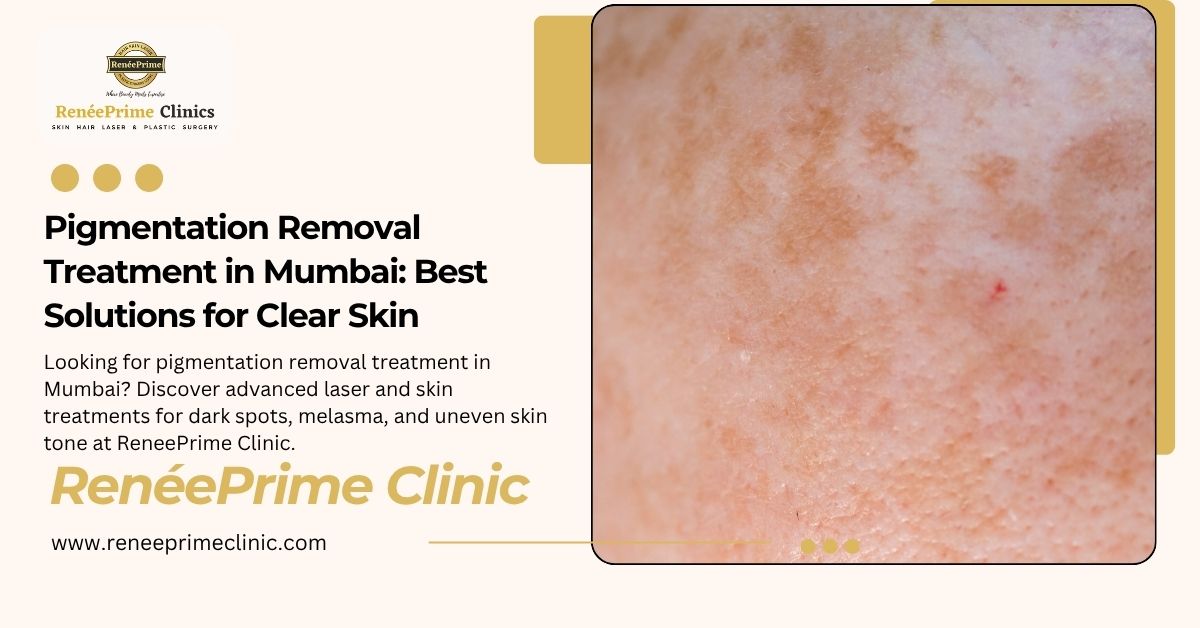
Your skin gets its color from melanin, a natural pigment produced by skin cells. When melanin starts collecting unevenly, darker patches begin appearing on certain areas of the skin.
Sometimes the pigmentation sits closer to the surface. Sometimes it goes deeper. That difference matters more than most people realise because deeper pigmentation usually takes longer to improve.
In clinic practice, one thing becomes very clear: not all pigmentation behaves the same way.
A person dealing with post-acne marks may respond beautifully to peels. Someone with melasma may need a slower and more careful approach because heat, hormones, and sunlight can trigger it repeatedly.
That is why random online treatments often fail. They treat every dark patch as if it is the same condition.
Common Types of Pigmentation Seen in Mumbai
Melasma: Melasma usually appears as brown or grey-brown patches on the cheeks, forehead, nose, or upper lip. Many women notice it becoming darker during summer, after pregnancy, or during hormonal changes.
One frustrating thing about melasma is that it often comes back if sun protection is ignored.
Post-Inflammatory Hyperpigmentation (PIH): This type of pigmentation appears after inflammation. Acne is one of the biggest reasons for it in Indian skin tones.
Sometimes even harsh facials, picking at pimples, or aggressive scrubbing can leave marks behind.
Sun Pigmentation: Years of UV exposure slowly create tanning, sun spots, and patchy skin tone. Mumbai’s heat and humidity make this even more common, especially for people who travel daily or spend long hours outdoors.
Acne Pigmentation: Acne may heal, but the marks often stay much longer than expected. Many patients say the marks bother them more than the pimples themselves.
Signs You May Need Pigmentation Removal Treatment
Not every dark spot needs advanced treatment. But when pigmentation stays for months or starts affecting confidence, professional treatment becomes worth considering.
Some common signs include:
- uneven skin tone that makeup cannot fully hide
- acne marks staying for months
- dark patches on cheeks or forehead
- pigmentation getting darker after sun exposure
- tanning that never fully fades
- dull or patchy-looking skin
A lot of patients come to the clinic after trying several “viral” skincare products online. Sometimes the skin becomes more irritated instead of clearer.
That is why proper skin assessment matters first. Rushing into strong treatments without understanding your skin usually does more harm than good.
What Causes Pigmentation to Become Worse?
Pigmentation rarely has a single cause. Most of the time, it builds slowly because of repeated triggers.
Sun Exposure: This is one of the biggest reasons pigmentation returns even after treatment. Many people underestimate daily sun exposure. A short commute in Mumbai traffic, sitting near windows, or stepping out without sunscreen repeatedly can keep stimulating melanin production.
Hormonal Changes: Melasma is strongly linked to hormones. Pregnancy, thyroid imbalance, PCOS, and contraceptive medications can all influence pigmentation patterns.
Acne and Skin Inflammation: Inflamed skin produces more pigment during healing. That is why acne marks often appear darker in Indian skin compared to lighter skin tones.
Wrong Skincare Products: Overusing exfoliating acids, scrubs, bleaching creams, or random social-media skincare trends can damage the skin barrier. Once the skin becomes irritated, pigmentation may actually deepen.
Best Pigmentation Removal Treatment Options in Mumbai
There is no single “best” treatment for everyone. A treatment that works extremely well for one person may irritate another person’s skin.
At ReneePrime Clinic, treatment selection usually depends on:
- pigmentation depth
- Fitzpatrick skin type
- skin sensitivity
- history of melasma or acne
- previous treatments
- sun exposure habits
And honestly, sometimes the best approach is the slower one.
Trying to clear years of pigmentation aggressively within a week is usually not realistic.
Laser Treatment for Pigmentation on Face
Laser therapy is commonly used for stubborn pigmentation that sits deeper in the skin.
Q-switched lasers target excess pigment without heavily damaging surrounding skin tissue. These treatments are often recommended for:
- sun spots
- acne pigmentation
- patchy uneven tone
- certain dermal pigmentation concerns
Patients are often nervous about lasers before their first session. Most describe the feeling as mild heat or tiny snapping sensations rather than severe pain.
Explore advanced laser skin treatment options for deeper pigmentation concerns.
Chemical Peels for Dark Spots
Chemical peels help remove damaged surface skin gradually. They can improve:
- mild pigmentation
- acne marks
- tanning
- dull skin texture
A stronger peel does not always mean better results.
In Indian skin, overly aggressive peels sometimes increase irritation and post-inflammatory pigmentation. That is why treatment strength needs to be selected carefully.
Treatment for Melasma and Uneven Skin Tone
Melasma is usually one of the trickiest pigmentation concerns to manage long-term. Heat exposure alone can trigger flare-ups in some patients.
Treatment may involve:
- topical depigmenting creams
- chemical peels
- laser sessions
- tyrosinase-inhibitor-based skincare
- tranexamic-acid-based therapies
- strict sunscreen maintenance
Patients looking for customised uneven skin tone treatment plans often benefit from combination therapies instead of relying on one single procedure.
Acne Pigmentation Treatment for Clearer Skin
Post-acne pigmentation usually improves with a combination of:
- chemical peels
- laser sessions
- microneedling
- medical skincare routines
You can also explore specialised acne pigmentation treatment options designed specifically for Indian skin types.
Most people begin noticing gradual brightening after a few sessions – not overnight fairness, but healthier and more even-looking skin.
Laser vs Chemical Peel: Which One Is Better?
| Skin Concern | Treatment Commonly Recommended |
|---|---|
| Mild tanning | Chemical peel |
| Acne marks | Peels or lasers |
| Deep pigmentation | Laser treatment |
| Melasma | Combination therapy |
| Uneven skin tone | Customised treatment plan |
This is exactly why consultation matters. Pigmentation treatment is not only about removing dark spots. It is also about avoiding unnecessary irritation that can trigger rebound pigmentation later.
What Happens During Pigmentation Treatment?
The first appointment is usually more about understanding your skin than rushing into procedures.
Doctors examine:
- how deep the pigmentation is
- whether the skin barrier is damaged
- previous product use
- acne history
- hormonal triggers
- sun exposure patterns
Sometimes patch testing is advised before stronger procedures, especially for sensitive skin.
Typical Treatment Process
- Consultation and skin analysis
- Customised treatment planning
- Laser sessions, peels, or combination therapy
- Aftercare guidance
- Follow-up evaluation and maintenance planning
Most patients return to work the same day after treatment.
Some notice early improvement after 2-3 sessions. Deeper pigmentation usually needs more patience.
And that is normal.
Pigmentation Treatment Cost in Mumbai
The cost of pigmentation removal treatment in Mumbai depends on the type of pigmentation, the technology used, and the number of sessions required.
Surface pigmentation is generally easier to treat than deep melasma or long-standing dermal pigmentation.
Cost can vary based on:
- treatment type
- severity of pigmentation
- treatment area
- number of sessions
- laser technology used
- combination procedures
Chemical peels are usually more affordable than advanced laser treatments. Combination approaches may cost more initially, but they often produce more stable long-term improvement for stubborn pigmentation concerns.
At ReneePrime Clinic, consultations focus on realistic treatment planning rather than exaggerated promises. Patients are guided clearly about expected timelines, maintenance care, and likely improvement based on their skin condition.
Patients interested in improving overall brightness and clarity may also explore skin brightening and whitening treatments depending on their concerns.
Results, Recovery, and Aftercare
Pigmentation improvement is usually gradual.
That part is important because many patients expect dramatic changes after the very first session. In reality, safer treatments often work slowly and steadily.
Depending on the procedure, temporary effects may include:
- mild redness
- slight peeling
- dryness
- temporary sensitivity
These effects usually settle within a few days.
What happens after treatment matters just as much as the procedure itself.
Without proper sunscreen use, pigmentation can return surprisingly fast – especially in Mumbai’s weather.
Important Aftercare Tips
- Use sunscreen daily, even indoors near windows
- Avoid harsh scrubs or active acids temporarily
- Keep the skin hydrated
- Avoid direct heat exposure immediately after treatment
- Follow the recommended skincare routine consistently
In Indian skin tones, improper aftercare sometimes triggers rebound pigmentation. That is one reason medically supervised treatment tends to be safer than experimenting with random home remedies.
Why Choose ReneePrime Clinic for Pigmentation Treatment in Mumbai?
At ReneePrime Clinic, treatment plans are designed after carefully studying the patient’s skin condition, lifestyle, and previous treatment history instead of following a standard one-size-fits-all approach.
The clinic focuses on gradual, medically guided improvement suitable for Indian skin types, with realistic expectations, transparent consultations, and practical aftercare support throughout the treatment process.
Book a Consultation at ReneePrime Clinic, Mumbai
If your pigmentation keeps returning despite trying different creams, facials, or home remedies, a proper skin assessment may help identify what is actually triggering the problem.
To learn more about personalised pigmentation removal treatment options in Mumbai, call or WhatsApp +91 95947 15522 and connect with ReneePrime Clinic for medically guided skin care designed for Indian skin types.