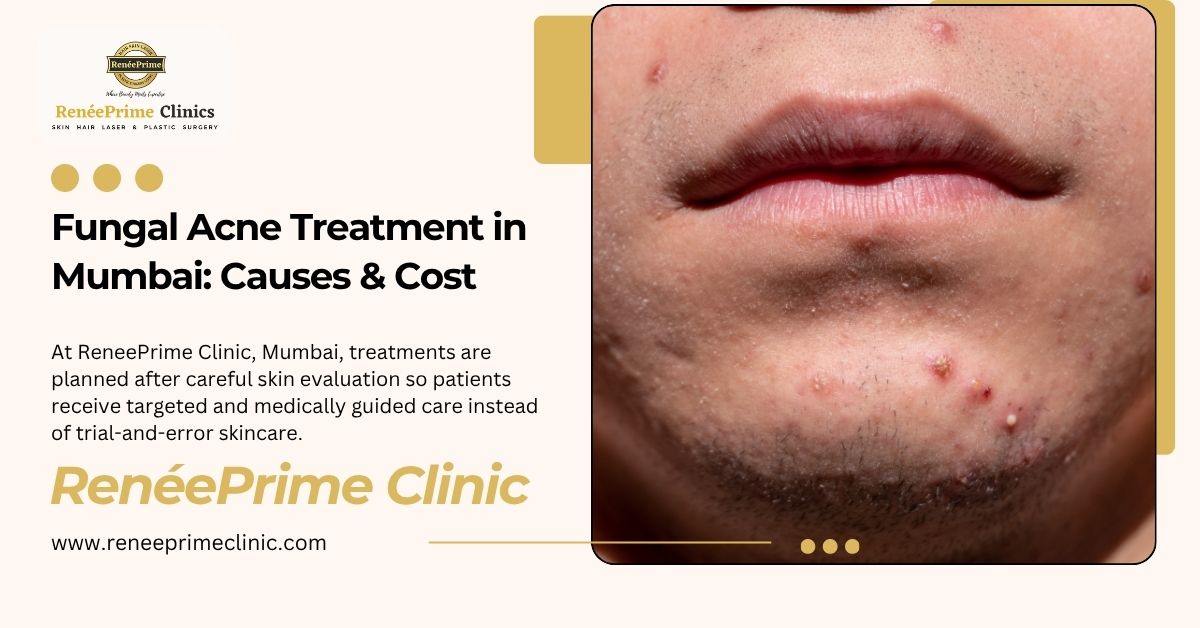
Tiny itchy bumps on your forehead, cheeks, chest, or back that refuse to go away may not be regular acne. Many people in Mumbai mistake fungal acne for normal breakouts and continue using acne creams that actually worsen the condition. Proper fungal acne treatment focuses on controlling the yeast growth causing the inflammation rather than simply drying the skin.
At ReneePrime Clinic, Mumbai, treatments are planned after careful skin evaluation so patients receive targeted and medically guided care instead of trial-and-error skincare.
Quick Summary:
Fungal acne treatment helps control itchy acne-like bumps caused by yeast overgrowth in hair follicles. Treatment may include antifungal creams, oral medicines, skincare changes, and clinic-based therapies depending on severity. Patients with recurring acne can also benefit from professional evaluation for related skin concerns like different types of acne treatment.
What Is Fungal Acne?
Fungal acne, medically called Malassezia folliculitis, is a skin condition caused by excessive growth of yeast inside the hair follicles. Unlike regular acne, fungal acne is not primarily caused by bacteria, clogged pores, or hormonal imbalance.
It commonly appears as:
- Small uniform bumps
- Red or skin-colored pimples
- Itchy breakouts
- Clusters on the forehead, chest, shoulders, or back
Mumbai’s humid weather, sweating, oily skin, and tight clothing can make fungal acne more common, especially in young adults and gym-goers.
Fungal Acne vs Regular Acne
Many patients confuse fungal acne with bacterial acne because both look similar. However, fungal acne usually:
- Feels itchy
- Appears in uniform-sized bumps
- Spreads quickly in clusters
- Does not respond well to regular acne creams
Traditional acne products containing heavy oils or antibiotics may worsen fungal acne by disturbing the skin’s natural balance.
Common Causes of Fungal Acne
Fungal acne develops when yeast naturally present on the skin grows excessively inside hair follicles. Several lifestyle and environmental factors can trigger this imbalance.
Common causes include:
- Excess sweating
- Humid climate
- Tight gym clothing
- Oily skincare products
- Weak skin barrier
- Excess oil production
- Long-term antibiotic use
People with oily or acne-prone skin are often more likely to experience repeated fungal breakouts.
What Causes Fungal Acne on the Forehead?
The forehead is one of the most commonly affected areas because sweat, hair oils, and trapped heat create an ideal environment for yeast growth. Heavy sunscreens, oily hair products, and helmet use may also contribute to forehead fungal acne.
Why Mumbai’s Climate Can Trigger Fungal Acne
Mumbai’s hot and humid weather increases sweating throughout the year. Constant moisture on the skin allows yeast to multiply faster. People who travel long hours, exercise frequently, or work outdoors often notice worsening breakouts during summer and monsoon seasons.
Symptoms of Fungal Acne
Fungal acne symptoms are often persistent and frustrating because they resemble regular acne but do not improve with standard treatments.
Common signs include:
- Tiny itchy bumps
- Red inflamed follicles
- Acne-like rash on chest and back
- Burning or irritation
- Sudden flare-ups after sweating
- Breakouts that worsen in humidity
Some patients also develop dark marks after inflammation settles.
How to Identify Fungal Acne vs Acne
A dermatologist usually identifies fungal acne through clinical examination and symptom history. One major clue is itchiness, which is less common in standard acne.
Regular acne often includes:
- Blackheads
- Whiteheads
- Painful cysts
Fungal acne usually appears as similar-sized itchy bumps without blackheads.
Patients dealing with acne marks after repeated breakouts may also explore treatments for acne scar treatment in Mumbai once the active condition is controlled.
Fungal Acne Treatment Options in Mumbai
The right fungal acne treatment depends on severity, skin type, recurrence, and previous treatment history. At ReneePrime Clinic, treatment plans are personalised after detailed skin assessment.
Topical Antifungal Treatments
Mild fungal acne can often improve with:
- Antifungal creams
- Medicated face washes
- Ketoconazole-based products
- Sulfur or zinc-based cleansers
Patients are also guided on avoiding pore-clogging skincare products that can worsen flare-ups.
Oral Medications for Severe Cases
Persistent or widespread fungal acne may require oral antifungal medicines prescribed under medical supervision. These medications help reduce yeast overgrowth from within and are usually recommended for a limited duration.
Self-medication should be avoided because incorrect medicine use may irritate the skin or trigger recurrence.
Clinic-Based Treatments for Persistent Fungal Acne
For stubborn or recurring fungal acne, dermatologists may combine medications with advanced skin therapies such as:
- Gentle chemical peels
- Oil-control treatments
- Skin barrier repair therapies
- Professional exfoliation
Patients with post-acne texture issues may also benefit from procedures like microneedling for acne scars after the fungal infection is controlled.
Recurring itchy breakouts that do not improve with regular acne creams may need professional evaluation. Early diagnosis can prevent long-term skin irritation, pigmentation, and unnecessary product use.
Step-by-Step Diagnosis and Treatment Process
At ReneePrime Clinic, fungal acne treatment starts with understanding the patient’s skin condition, triggers, and skincare habits.
The process usually includes:
- Detailed skin examination
- Evaluation of previous acne treatments
- Identification of fungal triggers
- Personalised treatment planning
- Skincare and lifestyle guidance
- Follow-up monitoring for recurrence prevention
Patients are also educated about avoiding heavy oils, over-exfoliation, and unnecessary antibiotic creams that may worsen the condition.
Fungal Acne Treatment Cost in Mumbai
The cost of fungal acne treatment in Mumbai depends on the severity of the condition and the type of treatment required. Mild cases may only need topical medications and skincare guidance, while persistent fungal acne may require oral medicines and clinic-based procedures.
Approximate cost factors include:
- Dermatologist consultation
- Prescription antifungal medicines
- Medical-grade cleansers
- Chemical peel sessions
- Follow-up appointments
In Mumbai, basic fungal acne treatment may start from a few thousand rupees, while advanced combination treatments can cost more depending on session requirements and skin response.
Factors That Affect Cost
Several things influence the overall cost:
- Extent of breakouts
- Duration of condition
- Skin sensitivity
- Need for procedures
- Presence of acne scars or pigmentation
Patients with severe back or body acne may also require specialised treatment plans such as back acne treatment in Mumbai.
Is Fungal Acne Treatment Worth It?
Yes, especially for patients experiencing recurring breakouts that fail to respond to regular acne products. Proper diagnosis can reduce repeated flare-ups, unnecessary expenses on skincare products, and long-term skin damage.
Risks, Side Effects, and Safety
Fungal acne treatment is generally safe when performed under professional guidance. However, some medications and active ingredients may cause temporary side effects such as:
- Dryness
- Mild peeling
- Skin sensitivity
- Temporary redness
Using strong acne products without proper diagnosis can worsen irritation or damage the skin barrier. Patients should also understand the possible side effects of acne treatment before starting aggressive skincare routines.
At ReneePrime Clinic, treatment plans are adjusted based on skin sensitivity and patient comfort.
Recovery, Results, and Prevention Tips
Most patients begin noticing improvement within a few weeks after starting the correct fungal acne treatment. Consistency is important because stopping treatment too early may cause recurrence.
Helpful prevention tips include:
- Showering after sweating
- Avoiding oily skincare products
- Wearing breathable clothing
- Keeping the skin dry
- Using dermatologist-approved cleansers
How to Treat Fungal Acne Permanently
While fungal acne can be controlled effectively, recurrence is possible if triggers continue. Long-term management focuses on:
- Maintaining skin hygiene
- Using suitable skincare
- Controlling excess sweat and oil
- Following medical advice consistently
Patients recovering from acne may also want to understand the stages of acne healing to track realistic skin improvement timelines.
Why Choose ReneePrime Clinic
ReneePrime Clinic focuses on individualised fungal acne treatment rather than one-size-fits-all skincare. Every patient receives a detailed skin assessment, transparent discussion about realistic results, and guidance tailored to Mumbai’s climate and lifestyle. The clinic emphasises patient comfort, medically guided care, and practical long-term prevention strategies.
Book Your Consultation at ReneePrime Clinic
Persistent itchy acne-like bumps should not be ignored or treated blindly with random skincare products. At ReneePrime Clinic, Mumbai, patients receive personalised fungal acne treatment plans designed for their skin type and lifestyle.
Call or WhatsApp: +91 95947 15522
Location: Mumbai
Book your consultation today for expert-guided care and clearer, healthier skin.