
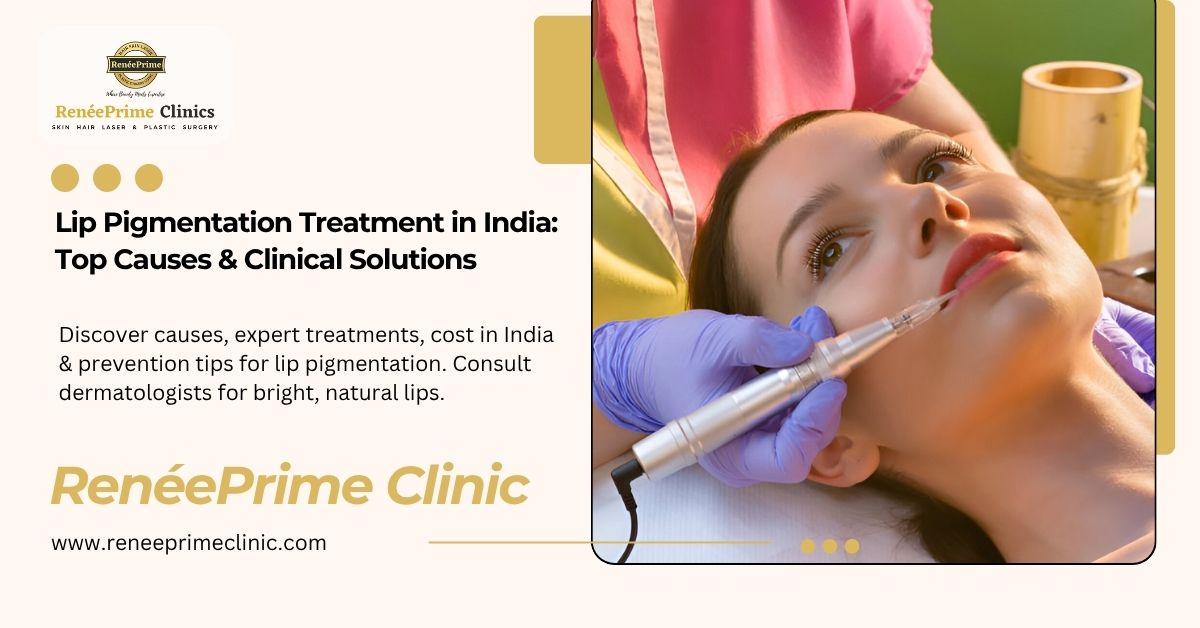
Discoloured or unevenly pigmented lips can be a little unsettling. For some of us, it’s just a faint dark patch that doesn’t really bother us, but for others, it’s more noticeable. Either way, it often leaves us wondering; Is there a way to get back our naturally pink lips?
Lip pigmentation treatment isn’t just about beauty; it’s about restoring confidence and feeling like ourselves again. The causes are surprisingly varied from lifestyle choices to underlying health conditions and so are the solutions.
We often see clients walk in thinking their darkened lips are permanent. But more often than not, they’re not. The good news? There are safe and effective treatments available today, both at home and professionally. But before we explore them, let’s understand what lip pigmentation actually is and why it shows up in the first place.
What Is Lip Pigmentation?
Lip pigmentation refers to a visible darkening of the lips caused by excess melanin or damaged skin cells. It can affect the upper lip, lower lip, or both. Some people notice it gradually, while others see a sudden shift. Either way, it can feel a bit uncomfortable when it doesn’t match the rest of the face.
Sometimes, the pigmentation is patchy. In other cases, it’s uniform but significantly darker than your natural tone. While it’s usually harmless, many people seek treatment for cosmetic reasons and that’s entirely valid.
At ReneePrime Clinic, we often explain that lip pigmentation is quite common, especially in Indian skin tones. It’s also often confused with lip dryness or discoloration from allergies. Knowing the difference matters because it affects how we treat it.
To better understand how we address lip pigmentation in context, you may explore our broader Skin Treatment services which cover pigmentation of all kinds.
Causes of Lip Pigmentation
The reasons behind lip pigmentation are wide-ranging. Some are environmental, others hormonal, and a few are entirely unexpected.
Let’s start with the basics sun exposure. Our lips have thinner skin than the rest of our face and produce less melanin. When exposed to UV rays without protection, they can darken over time. If you’ve ever spent a long day outdoors and noticed your lips look dull or two shades darker the next day, that’s likely why.
Smoking is another major culprit. Nicotine and other chemicals in tobacco reduce blood flow, causing lips to lose their natural pink tone. Over time, this builds up and results in permanent pigmentation for many smokers.
Hormonal imbalances, especially during pregnancy or while on certain medications, can also affect melanin production. Melasma, a condition known for causing facial pigmentation, can sometimes extend to the lips too.
Allergic reactions to lip products, toothpaste, or even certain foods can lead to repeated inflammation. This triggers melanin overproduction as a defense response. We’ve seen patients who used a particular lip balm for years, only to find it was the very thing causing their darkened lips.
Vitamin deficiencies, particularly B12 and iron, also contribute. Deficiencies may make the lips appear purple, blue, or dark brown depending on the underlying cause.
Then there’s the issue of frequent lip licking. While it might seem harmless, this habit strips away the protective layer of the lips, leading to irritation and you guessed it pigmentation.
It’s rarely one cause. Most often, it’s a combination. That’s why we take time to evaluate each case individually at our clinic. Because the right diagnosis leads to the right treatment and sometimes, the solution is simpler than expected.
Prevention & Daily Care for Lip Pigmentation
Now, not everything needs a complex solution. Often, consistent daily habits can help prevent pigmentation or at least stop it from worsening.
The simplest step? Apply a lip balm with SPF. We tend to forget our lips when applying sunscreen, but they’re exposed to the sun just as much. A balm with SPF 30 or higher creates a protective barrier and helps prevent UV-induced pigmentation.
Staying hydrated makes a huge difference. Dehydration can make lips dry and flaky, worsening the appearance of pigmentation. Drinking plenty of water and using a hydrating lip balm helps maintain softness and even tone.
Be mindful of the products you use. Fragranced lipsticks, expired makeup, or even toothpaste with certain harsh chemicals can irritate the delicate skin on the lips. Try switching to mild, dermatologically-tested alternatives.
It might sound too simple, but quitting smoking can significantly lighten lips over time. It improves circulation and helps your lips regain their natural shade. We’ve seen visible changes in patients who stopped smoking and followed a basic lip care routine.
Also, avoid the habit of frequent lip licking or biting. It might feel soothing in the moment, but long-term, it causes more harm than good. The constant friction and saliva exposure lead to inflammation and discolouration.
Lastly, if you’re prone to allergies, keep track of what you apply to your lips. A patch test can often save you from chronic irritation.
We always tell our clients if you want long-lasting results, prevention and maintenance matter just as much as treatment.
At‑Home Remedies & Over-the‑Counter Options
Not everyone wants to jump into clinical treatments right away, and that’s perfectly okay. In fact, several clients prefer to try gentler at-home approaches first and in many mild cases, they work quite well.
Let’s start with natural remedies. Applying lemon and honey mixtures is a traditional solution passed down in many homes. Honey soothes while lemon gently exfoliates and may lighten pigmentation over time. But here’s the thing, it’s not for everyone. Sensitive lips can react badly to citrus. Always patch tests first.
Sugar scrubs using sugar with olive or almond oil are great for exfoliating dead cells. But don’t overdo it. Once or twice a week is enough. Over-scrubbing can do more harm than good.
Some people also swear by beetroot balm. It doesn’t actually remove pigmentation, but it gives a natural tint and is packed with antioxidants that support lip health.
When it comes to over-the-counter products, look for lip balms or serums with kojic acid, arbutin, or vitamin C. These ingredients help reduce melanin production and gently lighten the lips with regular use. However, results take time weeks, sometimes even months.
We do caution against DIY bleaching or harsh chemical peels at home. The lips are sensitive, and one wrong step can cause burns or worsen the pigmentation.
If you’re looking for safe, effective, and dermatologist-recommended options, we invite you to explore our blog on Pigmentation Treatment at Home. We’ve covered some science-backed remedies that work well for Indian skin tones.
At the end of the day, consistency matters more than speed. What works for one person might not work for another, so it’s important to observe, adjust, and when in doubt, consult a professional.
Professional Clinical Treatments for Lip Pigmentation
When at-home methods don’t deliver the results you’re looking for or if the pigmentation is deep and persistent it might be time to consider professional treatment. This is where clinical precision can truly make a difference.
At ReneePrime Clinic, we usually start with a detailed consultation. Understanding the type and depth of pigmentation is crucial. Only then do we suggest options tailored to each person’s skin and lip condition.
One of the most effective options is the Q-switched Nd:YAG laser treatment. It works by breaking down melanin in the deeper layers of the skin, allowing the body to naturally clear it over time. It’s relatively quick, minimally painful, and suitable for Indian skin types. Most clients see results in 3 to 5 sessions, though this can vary.
Chemical peels for lips yes, they exist are another great choice. These use gentle acids like lactic acid or mandelic acid to exfoliate and lighten the pigmented areas. Don’t worry they’re specially formulated for the sensitive skin on your lips.
Some cases may benefit from topical lightening agents prescribed by dermatologists. These might include azelaic acid, hydroquinone (in regulated amounts), or retinoids, depending on your needs.
And for those who prefer non-invasive maintenance, lip hydrating masks and pigmentation-repair serums applied in a clinical setting offer gradual but visible improvements.
It’s important to note, no treatment gives instant results. But with the right plan, improvement is always possible.
And while you’re exploring treatment options, you can also visit ReneePrime Clinic to get an idea of our expertise in cosmetic dermatology and advanced skincare.
Choosing the right treatment depends not just on the pigmentation, but also your lifestyle, tolerance for downtime, and skin sensitivity. That’s why a customised approach is always better than a one-size-fits-all solution.
Lip Pigmentation Cost Range in India
Let’s talk about cost because, honestly, it’s one of the first questions people ask us. And rightly so.
The price of lip pigmentation treatment in India can vary quite a bit, depending on the method chosen, the severity of the pigmentation, and the clinic’s location and expertise.
For laser treatments, the average cost per session typically falls between ₹3,000 to ₹7,000. Most clients need multiple sessions generally around 3 to 5 for visible, long-term results. Chemical peels tend to be slightly more affordable, often ranging from ₹2,000 to ₹5,000 per session. Again, how many sessions you’ll need depends on your specific case.
Prescription creams or serums, when recommended as part of a dermatologist-guided plan, are relatively inexpensive but they work best in combination with clinical care.
Of course, we believe cost shouldn’t be the only factor in your decision. Safety, hygiene, and the experience of the dermatologist matter just as much if not more.
If you’re curious to understand pricing in more depth, we’ve explained it in detail in our article on Pigmentation Laser Treatment Price. It breaks down treatment costs, what’s included, and what factors might affect the final price.
Transparency matters to us. That’s why we always provide a full treatment plan with expected costs after the consultation so you know exactly what to expect, no surprises.
Side Effects & Safety Considerations
Whenever clinical treatments are discussed, safety comes up and for good reason. The lips are delicate, and no one wants to take risks with such a visible area.
The good news is that when done by experienced professionals, most lip pigmentation treatments are safe and well-tolerated. But, like any cosmetic procedure, there are a few things to keep in mind.
Laser treatments may cause temporary redness, mild swelling, or sensitivity. These effects usually subside within a few hours to a day. Some people experience mild peeling a few days later; it’s normal, and often a sign the treatment is working.
Chemical peels, if not properly managed, can lead to over-exfoliation or irritation. That’s why we always conduct a patch test and use formulations specially designed for lip skin.
In rare cases, overuse of prescription creams (especially if misused without supervision) can result in increased dryness or rebound pigmentation. We advise against self-medicating for this reason.
The safest way to minimise risks is to have your treatment done at a reputable clinic, under expert supervision. At ReneePrime Clinic, we personalise every plan, use clinically approved products, and guide our clients through post-treatment care.
If you’re ever unsure or anxious about a treatment’s safety, don’t hesitate to Book a Consultation. We believe in empowering our patients with knowledge before they make any decisions.
Consult us to Take Care of Your Lips
If you’ve been living with dark or pigmented lips and wondering whether anything can be done it can.
At ReneePrime Clinic, we offer personalised lip pigmentation treatments that are safe, science-backed, and designed for Indian skin tones. Whether you’re considering lasers, peels, or even just want an expert opinion on your current routine, we’re here to help.
We don’t believe in one-size-fits-all skincare. Every lip, like every face, is unique. That’s why our dermatologists take time to understand the cause behind the pigmentation before suggesting any treatment.
Want to take the first step? You can Book an Appointment online or visit our clinic for a consultation. No pressure, just guidance, clarity, and the support you need to make the right decision.
Conclusion
Lip pigmentation isn’t just a cosmetic concern; it can affect how we feel when we look in the mirror, how we choose lipsticks, or even how confidently we smile.
The good news is, it’s manageable. Whether caused by sun exposure, habits, or hormones, there are solutions available today that are safe, effective, and tailored to your needs. From home remedies to advanced dermatological treatments, the journey may take a little time but the results are worth it.
We always say; don’t ignore your lips. They’re just as important as any other part of your skin. And with a little care, they can return to their healthy, natural tone.
If you’d like to explore your options further, our team at ReneePrime Clinic is ready to help. You can also read more about our approach to Pigmentation Treatment here.
Frequently Asked Questions
Is lip pigmentation permanent?
Not always. It depends on the cause. Pigmentation due to smoking or sun damage can often be reversed with proper care and treatment. Hormonal pigmentation may take longer to fade but is still treatable in most cases.
Can I treat lip pigmentation at home?
Yes, for mild pigmentation. Natural remedies like honey and lemon, beetroot balm, or vitamin C lip serums can help over time. However, if pigmentation persists or worsens, it’s best to consult a dermatologist.
How long does it take to see results from clinical treatment?
Results vary depending on the treatment. Laser and chemical peels typically show improvement within 3-5 sessions. Topical treatments may take a few weeks to a couple of months.
Are there any side effects of lip pigmentation treatments?
Mild redness or sensitivity is common, especially after laser or peel sessions. But serious side effects are rare when the treatment is done under professional care.
Is the treatment painful?
Most treatments are minimally uncomfortable. Patients describe lasers as a mild tingling or heat sensation. Chemical peels may cause slight stinging for a few minutes.
Can dark lips come back after treatment?
Yes, if the underlying cause isn’t addressed. For example, if someone continues smoking or skipping SPF, the pigmentation might return. That’s why prevention is key after treatment.


