Most people think the hard part ends once acne settles down. It usually doesn’t.
The pimples disappear, but the marks stay behind – tiny brown spots near the cheeks, darker patches around the jawline, uneven skin that suddenly looks dull in photos or under bright light. A lot of patients visiting skin clinics in Mumbai say the same thing: “My acne is better, but my skin still doesn’t look clear.”
That lingering discoloration is called post-acne pigmentation. And honestly, it can be more stubborn than the acne itself.
Professional acne pigmentation treatment focuses on reducing those marks safely without damaging the surrounding skin. Depending on how deep the pigmentation is, treatment may involve chemical peels, laser sessions, microneedling, or medical skincare designed specifically for Indian skin tones.
Quick Summary
Acne pigmentation treatment helps reduce dark spots and uneven skin tone left after acne heals. Mild pigmentation may improve with medical skincare or chemical peels, while older or deeper marks often respond better to laser-based treatments. At ReneePrime Clinic, personalised pigmentation treatment in Mumbai is planned after detailed skin analysis to avoid unnecessary procedures and support safer results.
What Exactly Is Acne Pigmentation?
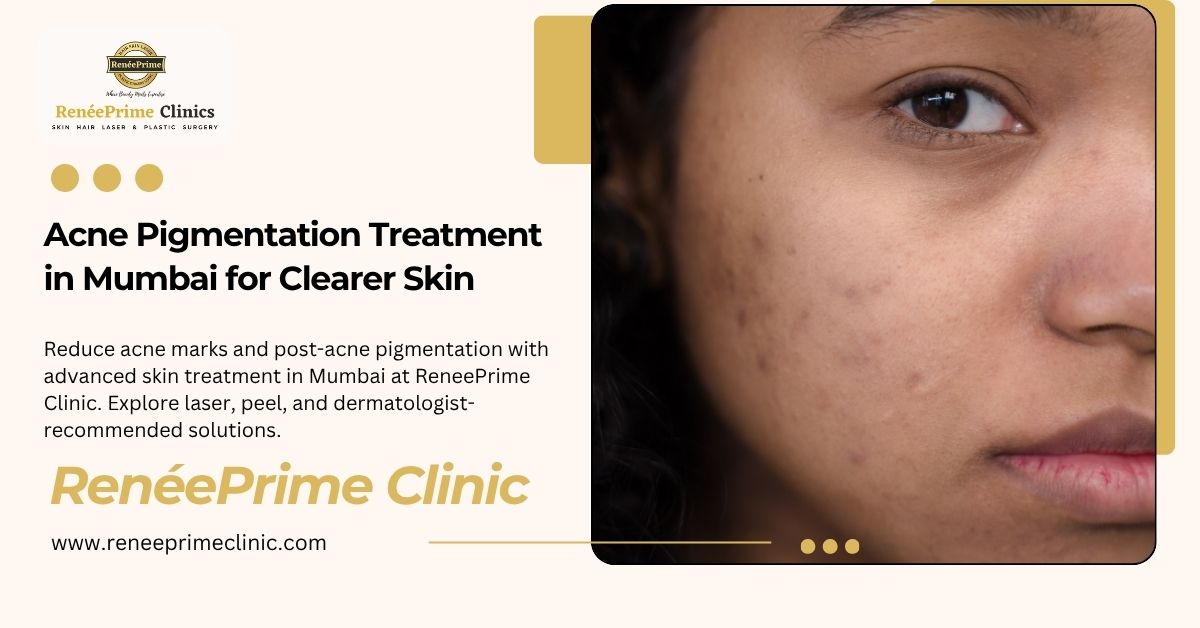
Acne pigmentation is the discoloration left behind after inflammation settles. The skin produces extra melanin during healing, and that extra pigment creates visible marks.
These spots are usually:
- brown,
- red,
- grey-brown,
- or patchy-looking in some lighting.
One important thing people often misunderstand – acne pigmentation and acne scars are not the same.
Scars affect skin texture. Pigmentation affects skin color.
That difference matters because pigmentation is usually easier to treat than deep acne scars.
Why Indian Skin Gets Pigmentation More Easily
Indian skin tones naturally contain more active melanin. That’s one reason post-inflammatory hyperpigmentation, often called PIH, tends to last longer in Indian patients compared to lighter skin tones.
Even small habits can make it worse:
- squeezing pimples,
- over-scrubbing,
- skipping sunscreen,
- trying harsh DIY remedies,
- or using random online skincare products together.
Dermatologists in Mumbai see this constantly – irritated skin that became darker after people tried to “dry out” acne too aggressively.
Why Acne Marks Sometimes Stay for Months
Fresh acne marks can fade on their own. But deeper pigmentation behaves differently.
Some marks sit only on the surface. Others settle deeper beneath the skin and become stubborn, especially after repeated breakouts or painful cystic acne.
Sun exposure also plays a major role. Even daily commuting in Mumbai traffic without SPF protection can keep pigmentation looking darker for longer.
One common mistake? People stop treatment too early.
The skin may start looking slightly brighter after a few weeks, so they switch products or discontinue sessions midway. Then the pigmentation slowly returns or stops improving.
Can Acne Pigmentation Become Permanent?
Sometimes, yes.
Older pigmentation that has been repeatedly irritated may linger for years if left untreated. This is more common in people who:
- keep getting active acne,
- pick at healing pimples,
- or damage their skin barrier with strong exfoliants.
That’s why early treatment is usually easier and more predictable than trying to correct years of accumulated pigmentation later.
Acne Pigmentation Treatment Options in Mumbai
Two patients can walk into the same clinic with “acne marks” and still need completely different treatments.
Someone with fresh red spots after teenage acne may improve with peels and skincare. Another person with old brown pigmentation sitting deeper in the skin may respond better to laser sessions.
Good treatment starts with understanding the skin first – not choosing the trendiest procedure online.
At ReneePrime Clinic, treatment plans are customised based on:
- pigmentation depth,
- acne history,
- skin sensitivity,
- current inflammation,
- and daily sun exposure habits.
Chemical Peel Treatment for Acne Marks
Chemical peels are commonly used for mild to moderate acne pigmentation.
These treatments exfoliate damaged upper skin layers and encourage healthier skin renewal underneath. Ingredients like glycolic acid, salicylic acid, mandelic acid, and lactic acid are often selected according to the patient’s skin type.
Peels are usually helpful for:
- fresh acne marks,
- oily skin,
- uneven skin tone,
- mild tanning,
- and dull skin texture.
Some patients expect dramatic results after one session. In reality, improvement tends to happen gradually over multiple sittings. Skin that is treated too aggressively can become irritated and darker instead of clearer.
Patients with widespread pigmentation may also explore advanced pigmentation removal treatment options after consultation.
Laser Treatment for Acne Pigmentation
Older brown marks often respond better to laser treatment because the pigment sits deeper beneath the skin surface.
Q-switched lasers and fractional laser treatments are commonly used to target stubborn pigmentation while also improving overall skin texture.
These treatments may help when patients have:
- long-standing acne marks,
- patchy pigmentation,
- mild acne scarring,
- or uneven skin tone that skincare alone cannot improve.
For Indian skin tones, laser settings matter a lot. Overly aggressive treatment can trigger rebound pigmentation, especially in sensitive skin.
That’s one reason dermatologist-guided planning becomes important instead of choosing treatments purely based on social media trends.
Patients looking for deeper correction sometimes consider laser skin treatment after proper skin assessment.
Microneedling for Pigmentation and Acne Scars
Not everyone with acne pigmentation has perfectly smooth skin underneath. Some patients also notice enlarged pores or shallow acne scars.
Microneedling works by creating tiny controlled micro-injuries that stimulate collagen repair. Over time, this helps improve both texture and mild pigmentation.
The results usually look gradual rather than artificial. That’s one reason many patients prefer combination approaches instead of relying on one aggressive procedure.
Medical Skincare Still Matters
Procedures help, but daily skincare plays a huge role in maintaining results.
Depending on the skin condition, dermatologists may recommend ingredients such as:
- niacinamide,
- azelaic acid,
- retinoids,
- vitamin C,
- or kojic acid.
One thing worth mentioning – layering too many active ingredients at home often backfires. A damaged skin barrier becomes irritated easily, and irritated skin tends to pigment more.
Patients dealing with both tanning and acne marks may also benefit from sun pigmentation treatment, especially after long-term UV exposure in Mumbai.
Which Treatment Is Usually Best for Acne Pigmentation?
There’s no universal answer. The “best” treatment depends on what the skin actually needs.
Here’s a simple overview:
| Treatment | Usually Best For | Sessions | Downtime |
|---|---|---|---|
| Chemical Peels | Fresh acne marks, oily skin | 4-6 | Minimal |
| Q-Switched Laser | Deep brown pigmentation | 4-8 | Mild redness |
| Microneedling | Pigmentation with shallow scars | 3-6 | 1-3 days |
| Medical Skincare | Mild pigmentation | Ongoing | None |
Sensitive skin often responds better to slower, gradual correction instead of aggressive procedures.
That’s something many patients only realise after irritating their skin with strong home treatments.
What Happens During Acne Pigmentation Treatment?
Most treatments start with a detailed consultation rather than jumping straight into procedures.
The skin is examined for:
- active acne,
- pigmentation depth,
- sensitivity,
- acne scarring,
- previous treatment history,
- and overall skin barrier health.
Once the assessment is complete, a treatment plan is prepared.
A typical session may involve:
- Cleansing and skin preparation
- Peel, laser, or microneedling procedure
- Cooling or calming application
- Post-treatment guidance
- Follow-up review
Most sessions are outpatient procedures, so patients usually return home shortly afterward.
Acne Pigmentation Treatment Cost in Mumbai
The cost of acne pigmentation treatment in Mumbai depends on several factors:
- how stubborn the pigmentation is,
- whether active acne is still present,
- the number of sessions needed,
- and the type of treatment selected.
Approximate treatment ranges may include:
| Treatment | Approximate Cost |
|---|---|
| Chemical Peels | ₹2,000-₹6,000 per session |
| Laser Treatment | ₹4,000-₹15,000 per session |
| Microneedling with PRP | ₹6,000-₹18,000 per session |
People often ask whether one session is enough. Usually, it isn’t.
Pigmentation correction is a gradual process. Dermatologists generally prefer controlled improvement over aggressive treatment because overly harsh procedures can trigger irritation and worsen pigmentation in Indian skin.
At ReneePrime Clinic, treatment recommendations are based on skin condition rather than pushing unnecessary sessions.
Recovery, Results, and Aftercare
One thing patients notice early during treatment is that consistency matters more than speed.
Fresh marks may start fading within weeks. Older pigmentation usually takes longer.
Recovery varies by procedure:
- mild peels may cause slight dryness,
- lasers can create temporary redness,
- microneedling may leave mild sensitivity for a day or two.
How Long Does Acne Pigmentation Take to Fade?
Mild pigmentation may improve within 6-8 weeks with proper skincare and sun protection.
Older or deeper pigmentation often needs several months because the skin repairs itself gradually.
That can feel slow sometimes. But safer, controlled improvement is usually better than over-treating the skin and creating new irritation.
Important Aftercare Tips
- Use broad-spectrum sunscreen daily
- Avoid touching healing acne
- Don’t over-exfoliate
- Follow prescribed skincare consistently
- Avoid switching products too frequently
One very common issue in Mumbai clinics is patients stopping sunscreen once the weather becomes cloudy. Pigmentation often darkens again because UV exposure still affects the skin even during monsoon months.
Why Choose ReneePrime Clinic for Acne Pigmentation Treatment in Mumbai?
ReneePrime Clinic focuses on personalised treatment planning instead of one fixed solution for every patient. Skin sensitivity, acne history, pigmentation depth, and lifestyle factors are carefully considered before recommending procedures. Patients across Mumbai visit the clinic for medically guided skin treatments, transparent consultations, and realistic advice about expected improvement, downtime, and maintenance.
Book a Consultation at ReneePrime Clinic, Mumbai
Acne marks rarely disappear overnight, especially when the pigmentation has been building for years. The good part is that modern treatment options can improve them safely when the skin is assessed properly instead of treated randomly.
If you’d like to understand which treatment may suit your skin – peels, lasers, microneedling, or medical skincare – you can book a consultation at ReneePrime Clinic, Mumbai.
Call or WhatsApp: +91 95947 15522